

The world of artificial intelligence was once a dream. A hope for an advanced society.
But in my world, AI is the bane of my existence.
Almost every day in class, an assignment—short or long—will be passed out and I will hear a voice behind me say “I’m just gonna use ChatGPT.”
I see this as an issue – especially in our math and English classes.
These two classes are key components of what you go back to in everyday life, but some students now just don’t want to do the work and rather just google it and hope that its right.
The crazy thing is that so many students don’t double check that answers are even correct. It’s scary to think about what our generation will turn into when a lot of them googled their way through high school.
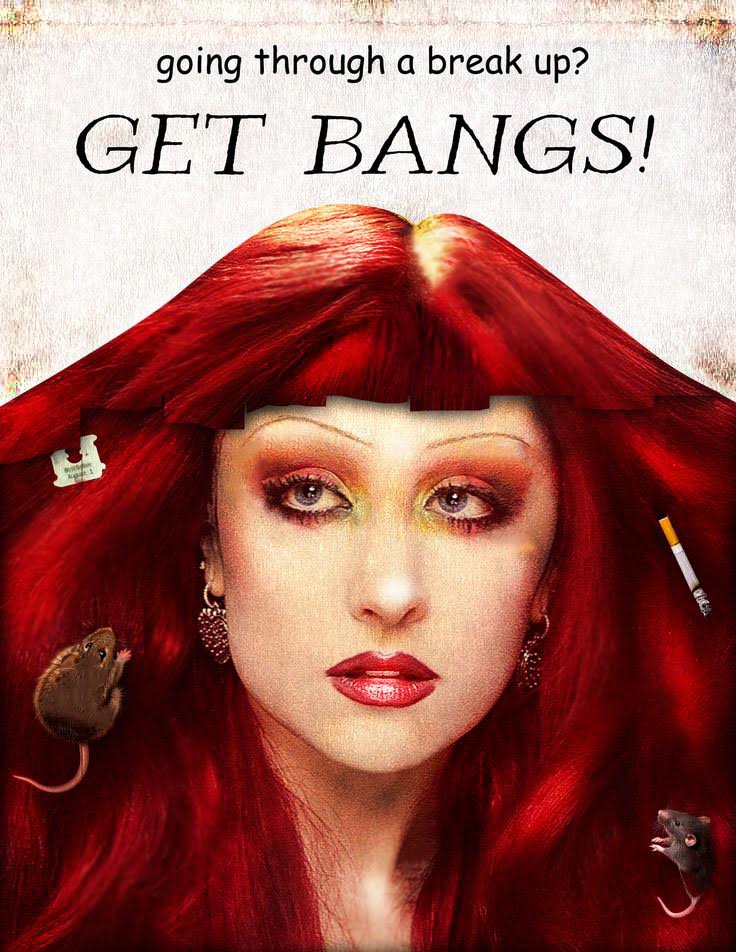
One of my biggest concerns is AI’s effect on our school’s artists like myself. It makes me wonder if I should even try to make a career out of my art or even go to art school when it has become so easy for people to type into a generator and create an entire short film, script, clothing design, or illustration, then call it original work.
A large percentage of text to image AI use has been directed at designers, filmmakers, animators, music artists and illustrators.
For some creators, AI can help make new ideas for themes and random plots. In school, students can use AI to find references if they are unable to find their idea online.
Even if that 20 percent proves to help, there’s another 80 percent that fear for their roles as creators. Even if there are positive applications for AI, it seems to be outweighed by the negative.
Central art teacher Noah Wellbrock-Talley, who sells his artwork at Zilla comic conventions and online shops, has seen his work made into knockoffs by AI.
“That’s one of the reasons I changed my cartoons that I sell from being sort of a pop vinyl, like cut and paste,” Talley said.
Talley used to sell hand-drawn cartoon avatars, but they stopped selling because of the easy access to AI generators, he said It’s not easy to argue with someone who doesn’t see the difference between real and text-to-image.
“All cartoons nowadays are a lot more dynamic than they used to be,” Talley said, “ and part of that is because I want to get away from the idea that my stuff could easily be taken, fed into a machine, and then spit it out. That bothers me.”
Talley said that AI has a negative impact on students’ abilities and motivation to become professional artists.
“I think fewer and fewer kids will want to go into art professionally,” he said. “It is a difficult sell to get students to say I want to pursue this as my career. Even if it may be a more career-oriented art field like graphic design, I think graphic design is getting hit the worst right now because it’s the easiest thing for AI to take over those jobs.”
The animation field is popular for students, but AI’s impact on digital illustration could change that.
Talley wants to find a way to allow students to create and submit digital art in the classroom, but the uncertainty of originality is indefinite.
AI negatively affected a Central art student three years ago, Talley said she did the AP portfolio for submission, and Larry Cullins, now retired art teacher let her do a lot of it digitally.
One work in her portfolio was a digital painting of a girl, morphing into an angler fish.
She ended up receiving a four out of a five point score when she could have gotten full credit if not for doubts of originality. Talley and Cullins both believed that was the reason for the lower grade.
It would be amazing if I could go home, make art, while an android takes care of my school work. But because today’s AI-influenced society perceives art as nothing more than just a final product, I can’t imagine that becoming a reality.